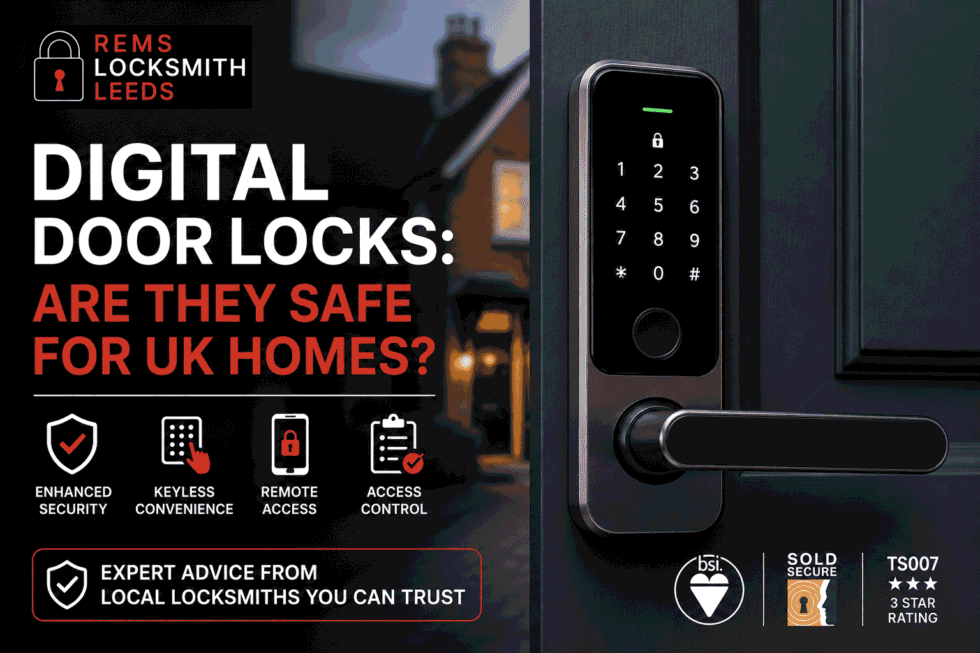
Digital door locks have become increasingly common across the UK. From modern apartments and family homes to Airbnb properties and small businesses, more people are choosing keyless entry over traditional keys. The convenience is obvious you no longer need to worry about losing keys, making spare copies, or wondering whether you locked the door before leaving.
But convenience naturally raises another question: are digital door locks actually safe for UK homes?
The short answer is yes but only when you choose a quality lock, install it correctly, and use it properly. Like any security product, a digital lock is only as good as its design, installation, and maintenance.
As locksmiths, we’ve seen both excellent smart lock installations and poorly fitted systems that leave properties vulnerable. In this guide, we’ll explain how digital door locks work, their advantages and disadvantages, common security concerns, and whether they’re the right choice for your home.
What Is a Digital Door Lock?
A digital door lock replaces or works alongside a traditional lock by allowing you to unlock your door without a standard key.
Instead of inserting a key, you may use:
- A PIN code
- A fingerprint scanner
- A smartphone app
- Bluetooth
- Wi-Fi
- An RFID card or fob
Many modern digital locks also include a mechanical backup key, ensuring you can still gain access if the batteries run out or the electronics fail.
These systems are designed to make access easier while maintaining a high level of physical security.
How Safe Are Digital Door Locks?
When people hear the word “smart,” they often think about hacking. In reality, the biggest security weakness is rarely the technology itself—it’s poor installation or poor user habits.
A professionally installed digital lock from a reputable manufacturer is extremely secure and often provides features that traditional locks simply cannot offer.
Modern digital locks typically include:
- Encrypted communication
- Automatic locking
- Tamper alarms
- Failed PIN attempt protection
- Temporary access codes
- Activity logs
- Emergency override options
These features don’t just make life easier they can also improve your home’s overall security.
Security Features That Make Digital Locks Safe
Encrypted Communication
Quality smart locks encrypt data sent between the lock and your mobile device. This prevents attackers from simply intercepting signals and unlocking your door.
Cheap, unbranded locks may not offer the same level of protection, which is why choosing a recognised manufacturer matters.
Automatic Locking
One of the most common reasons burglars gain access isn’t sophisticated lock picking—it’s unlocked doors.
Many digital locks automatically lock after the door closes, removing the risk of accidentally leaving your property unsecured.
Temporary Access Codes
Need to let a cleaner, family member, or delivery driver inside?
Instead of cutting extra keys, you can generate temporary PIN codes that expire after a certain time.
Once the code expires, access is automatically removed.
Activity Logs
Many smart locks record exactly when the door was opened and who accessed it.
This feature is particularly useful for:
- Families
- Holiday lets
- Airbnb properties
- Landlords
- Small businesses
Can Digital Door Locks Be Hacked?
This is probably the biggest concern homeowners have.
The honest answer is that any connected device carries some level of cyber risk. However, successful attacks on reputable digital locks are extremely rare.
Most security issues happen because:
- Weak PIN codes
- Outdated firmware
- Shared passwords
- Poor Wi-Fi security
- Cheap, low-quality products
Choosing a trusted lock, updating its software, and using strong login credentials significantly reduces these risks.
In many cases, forcing a door or attacking a weak cylinder remains much easier than trying to hack a properly secured smart lock.
Digital Locks vs Traditional Locks
Both systems have strengths.
Traditional locks are simple, reliable, and require very little maintenance.
Digital locks provide additional convenience, better access management, and more control over who can enter your property.
For many homeowners, the best solution combines both electronic convenience with high-quality mechanical security, such as an anti-snap euro cylinder or multipoint locking system.
The goal isn’t replacing security—it’s improving it.
Advantages of Digital Door Locks
No More Lost Keys
Lost keys are one of the most common reasons people call a locksmith.
With a digital lock, there’s no key to lose during everyday use.
Better Access Control
You decide who has access and when.
Instead of making multiple copies of your house key, you can create unique PIN codes for family members, guests, or contractors.
Codes can be deleted instantly whenever access is no longer needed.
Ideal for Rental Properties
Landlords and Airbnb hosts often need to provide access without meeting guests in person.
Digital locks remove the need for lockboxes and spare keys while allowing access to be managed remotely.
Smart Home Integration
Many digital locks work alongside:
- Smart lighting
- Security cameras
- Video doorbells
- Voice assistants
- Home automation systems
This creates a more connected and convenient home security setup.
Potential Disadvantages
Digital locks aren’t perfect.
Before installing one, it’s worth understanding a few limitations.
Battery Dependence
Most digital locks run on batteries.
Fortunately, battery life usually lasts several months, and quality models provide multiple low-battery warnings before power runs out.
Many also include emergency power options.
Higher Initial Cost
Digital locks generally cost more than standard cylinders.
However, many homeowners feel the additional convenience and security features justify the investment.
Installation Matters
A premium lock won’t perform properly if it’s installed incorrectly.
Incorrect alignment, loose fixings, or incompatible doors can all reduce security.
Professional installation helps ensure the lock functions exactly as intended.
Are Digital Locks Suitable for UK Doors?
Yes—but compatibility is important.
Many digital locks are designed for:
- Timber doors
- Composite doors
- UPVC doors
- Aluminium doors
However, some UK properties use multipoint locking systems, which require compatible smart lock solutions.
Before purchasing a lock, it’s important to check that it matches your existing door type and locking mechanism.
A locksmith can quickly identify the correct option.
Should You Choose a Digital Lock?
Digital locks are especially suitable for:
- Busy families
- Homeowners who frequently lose keys
- Landlords
- Airbnb hosts
- Holiday homes
- Small offices
- People wanting remote access
If you value convenience without compromising security, a quality digital lock can be an excellent investment.
Tips for Choosing the Right Digital Door Lock
Not every smart lock offers the same level of protection.
When comparing models, look for features such as:
- Strong build quality
- Trusted manufacturer
- Backup unlocking method
- Long battery life
- Mobile app support
- Secure encryption
- Tamper detection
- Warranty coverage
Avoid choosing solely based on price.
A cheap digital lock protecting your front door is rarely a worthwhile saving.
Keeping Your Digital Lock Secure
Good security doesn’t stop after installation.
Simple maintenance goes a long way.
- Replace batteries before they’re fully depleted.
- Install firmware updates when available.
- Use a strong PIN that’s difficult to guess.
- Remove old access codes you no longer need.
- Check the lock operates smoothly.
- Inspect the door alignment regularly.
These small checks help keep your lock performing reliably for years.
Common Problems Locksmiths See
As locksmiths, we regularly attend digital lock callouts.
The most common issues include:
- Forgotten PIN codes
- Flat batteries
- Incorrect installation
- Door alignment problems
- Software setup errors
- Damaged locking mechanisms
In many cases, the lock itself isn’t faulty the problem lies with the installation or door hardware.
Professional servicing can often resolve these issues without replacing the entire lock.
Are Digital Door Locks Worth It?
For many UK homeowners, the answer is yes.
Digital locks combine convenience with modern security features that traditional locks simply can’t provide. They make everyday access easier, improve control over who enters your property, and reduce many of the frustrations associated with physical keys.
That said, no lock is completely immune to attack.
The safest setup combines a high-quality digital lock with a secure door, a correctly fitted cylinder or multipoint locking system, and professional installation.
If security is your priority, don’t focus solely on the lock itself. Think about the entire door, frame, hinges, and overall installation.
A strong security system is always built from multiple layers.
Need Professional Digital Door Lock Installation in Leeds?
Whether you’re upgrading to a smart lock, replacing an older digital system, or need advice on the best option for your property, REMS Locksmiths Leeds can help.
Our experienced locksmiths install, repair, and maintain digital door locks for homes, flats, rental properties, and businesses across Leeds. We can also assess your existing security and recommend the most suitable solution for your door type and budget.
Choosing the right lock is important but installing it correctly is what truly keeps your property secure.